Dom Pym: Anybody can achieve anything. You know, what's the secret to your success, or how do I do that? Actually believing in not only yourself, but believing in the outcome, it can literally change your life.
Megan: Hey, I'm Megan Luttrell. I run Aussie Founders Club, a community for founders, operators, and investors. Largely, we've been an events-first, in-person community for the startup ecosystem, but now we're podcasters. I also run Kairos Recruitment, a recruitment company which supports startups and scaleups.
Geo: Hi, I'm Geo George, partner at Mayfly Ventures. We're a venture studio that builds industry-focused AI and software ventures. This is the Aussie Founders Club Life After Launch podcast.
Megan: We cut through the startup noise with unscripted stories and tactical advice from the founders who have built before us.
Geo: The show is all about what happens after you launch. The business lessons, the life lessons, and of course everything in between. That's Life After Launch.
Megan: All right, let's get into episode 1.
Geo: Let's get started.
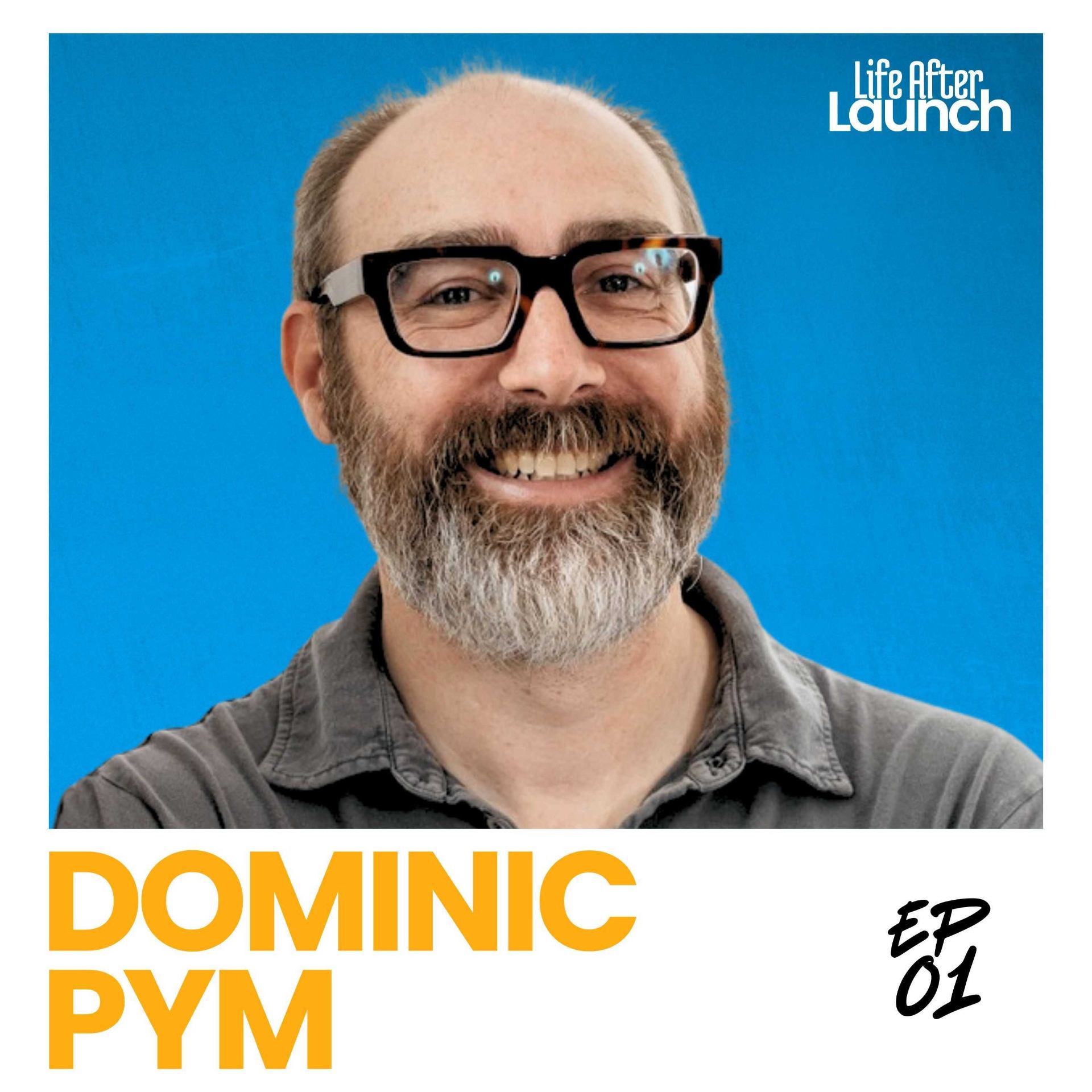
Megan: Straight out of the gate for our first episode, we're starting with one of Australia's most well-known and generous founders. Today's guest is Dom Pym, entrepreneur, technologist, investor, and co-founder of Up, one of Australia's fastest-growing digital banks.
Geo: But Dom's not just building companies, that would be too easy. He's helping shape Australia's startup ecosystem. He co-founded Euphemia, launched Triple Bubble, one of Australia's first fintech funds. And he's personally invested $85 million into the Australian startup scene. What a legend.
Megan: What stood out to me and everyone that meets Dom undoubtedly isn't his history of success, but it's more about how he got there. Dom grew up in a household where they lost everything, and yet his mum had this golden purse that somehow always had a way to have just enough money in it for what they needed.
Geo: And for his spare time, he's working on government policies that could literally reshape how Australia supports founders, families and women in the workforce.
Megan: There's some great takeaways in here, including why reaching out to successful people isn't annoying, it's essential.
Geo: And why comparing your bank to Instagram might actually be genius.
Megan: Let's get into it.
Dom Pym: Changing policy, changing the world.
Megan: Yeah.
Dom Pym: And they'll know it. And so they're behind the scenes.
Megan: A lot of podcasts talk about, um, what founders do, um, but I want to start by talking a little bit about what shaped you early on and set you up? Because you've built a life that is incredibly big and hugely impactful. Is there any defining things from your childhood that really feed into that?
Dom Pym: Yeah, I think there's quite a few things. So thanks for having me on, firstly. It's great to be here. I think when I sort of contemplate the past, I often have a very optimistic view of the future. And so I try to think about how the past has shaped the present in order for me to have that optimistic view.
Megan: Yeah.
Dom Pym: I think generally I'm a very optimistic person and so I think I can literally change the world. And because I think that, I try to do that. And so I think that's probably the framing or the context in which I would say, what are the most impactful things? To me, there's people that have influenced my life and I can rattle off a bunch of people that have literally changed my life. And then there's events that occurred. And the events that occurred throughout my life have changed the way I feel about life and the way I interact with other people, for example. And then also, you know, healthy skepticism of people's motivations and, you know, these sort of things. So I would say the big events for me was I love footy. You know, footy was a really big thing for me when I was a kid. It's almost kind of like an escape. It was, you know, something I could do and I was very good at it. And so I loved doing that. And there's lots of stories about footy, injuries and premierships and bottom of the ladder, wooden spoon, all this sort of stuff, best and fairest, all that stuff. But it helped to shape me as a person because it was a team sport. I was very good at it. I won all the awards and everything, and I could have gone on to have a football career, but I decided instead to go to university. So I think football had a big influence on me. And then I made a decision, which was literally a sliding doors moment, give football away and go to university, changed my life. Also, you know, I often talk about my mum because my mum and dad are very different people and you love your parents, but I often talk about my dad as an inspiration of what not to do. Like, he was the opposite for me. It's like whatever my dad did, I didn't want to do that. I want to spend time with my kids. I want to be a very present dad. I want to be involved with the family. I want to be caring and loving and all that sort of stuff. My dad was none of those things.
Megan: Yeah.
Dom Pym: And then my mum influenced me because she went through a learning experience where she left school at 14, as you do in those days, in order to earn an income and help the family. And so then she had kids and sort of never went back to work after that. And so she had kids about 33, I think. So between 14 and 33, she lived this amazing life that we knew nothing about. And then once we came on the scene, we'd sort of hear rumors and stories and all this sort of stuff. But the passions that my mum had for helping people or saving the planet or those sort of things, they sort of rubbed off on me and I'll never forget them. And there's moments in life, like when I've said before, when my mum came to primary school and presented about the ozone layer and the hole in the ozone layer and global warming and this sort of stuff. I've been investing in climate tech now for 25 years and it's because of my mum. So I think those moments in your life literally change and they're not all good. There's been bad things that have happened too. And when bad things happen, they also shape your perspective of life. And then also your motivation potentially to help others or your motivation to be a good citizen or do the right thing.
Geo: So there's this concept of creating from either an abundance mindset or a scarcity mindset. And Dom, throughout your career, it seems that you've had this perspective of exclusively creating from an abundance mindset. So how is it that you've been able to do that?
Dom Pym: Yeah, well, there's definitely been certain influences. There's 3 that jump to mind. So my mum, you know, we had nothing. We were very poor. We lost our house, we lost the car. We had nothing when we were kids. It was really horrible. And so I had to build everything from scratch. And it's really first generational wealth. Like we've literally built, I'm the first person in our family to—
Megan: We've done well with the first generation.
Dom Pym: But like first person to go to university, you know, like first person to go overseas, first person to do all those things that you sort of take in a privileged lifestyle as you just take it for granted. And my kids will take that stuff for granted, but I certainly, I never experienced anything like that.
Geo: Yeah.
Dom Pym: So for me, the people that jump out is number one, my mum, and probably a story I maybe haven't told before, but is that we had nothing, we were very poor, but my mum had a golden purse and it was literally a golden purse and just couldn't open and there was always money in it. And no matter what your need was in life, it's like in Harry Potter, like you go into the Room of Requirement or you put your arm into some sort of bag of necessity or whatever and it's always there. It's like what you need is available. So the golden purse always had money in it. And no matter what we needed, like a bus fare or even just to go buy some fish and chips or whatever it was you wanted to do when you're a kid, you could go to the golden purse, the gold purse, and it would just always have some coins in it or just enough to sort of do whatever you need to do. And that seemed like it was magic.
Geo: Yeah.
Dom Pym: And so my mum taught me like the envelope system of saving up. She had lots of envelopes and she'd put money into them all the time so that eventually when bills would come up, then we'd have the money available and stuff. And we built a lot of Up, particularly like the Unlimited Savers, or now I think it's limited to 50 Savers now, but a lot of that is built around that concept.
Geo: Yeah.
Dom Pym: And so there's direct lines between my mum teaching me to be generous and kind and all that sort of stuff. And then that manifesting in the businesses that I've created. And then there's 2 other people that immediately jump to mind. So one is my business partner. So Grant Thomas, I always say, when I'm talking about him publicly, it's his story to tell. So I won't tell his story, but his influence on me, he's 20 years older than me. He's wise, he's experienced, he's done all the things in life that I hadn't done. And so a lot of what he said and did and the way he behaved rubbed off on me. And he's an extremely generous person. And so during our 15-year career of working together and creating 3 different companies, I learned a lot from him, not only about culture and team and growth and strategy and all those sort of things, but also just about being a good human. And so that really stands out. And then the other person, the third one that had the most influence in that regard, is the sort of story of the Rich Dad Poor Dad.
Geo: Yeah.
Dom Pym: So if my dad was the poor dad, then my best mate's dad was the rich dad. And he wasn't a typical rich person. He was exceptionally rich beyond your imagination, but he made all the money through share market investing and futures investing. And in particular for him it was rare metals. And the amount of money he had is absolutely mind-boggling, particularly to a young person. But it was never about the money and that he didn't live lavishly. He drove like a little crappy old Renault. And he lived in a little, you know, 2-bedroom house in the suburbs. And so he was a bit of a miser, like never wanted to spend money and all this sort of stuff. But if you walked past him in the street, he'd be wearing his trackie dacks and his t-shirt and you'd have no idea that he was like one of the wealthiest people in Melbourne. And so he was a huge, huge influence on me because he taught me how money works. He taught me about things that are simple like compounding and leverage and stuff like that. You know, how to invest in the stock market and make good returns and these sort of things that, let's say, a regular parent wouldn't pass on to their child because it's not something they're good at and it's not something they know. Whereas he knew all that stuff. And so I think between my mum and my business partner and that guy, he remains nameless, you know, my rich dad.
Geo: Yeah.
Dom Pym: Those 3 people might've had the biggest influence on the way I think about wealth, the way I think about money, and the way I have like an abundance mindset and sort of a passion for helping others. And we were talking earlier about growing the ecosystem. Our mission is literally to elevate the ecosystem. And our secret mission is to create more Euphemias, more family offices, more people that are exited founders, more employees that have ESOPs, more wealth amongst the next generation of Australians. And we've been able to, with Up, help people with financial literacy and financial wellbeing. And we've been able to, with our own businesses, create money for people and ourselves, obviously. And so I think, yeah, a lot of that stems from, I'd say, those 3 people.
Megan: Well, how do we think, why do you think we don't see more of that from founders that have come out the other end and have maybe experiences that we don't have?
Dom Pym: And I think that what we need to do is for people that like us that recognize the value in that and have been the recipients of that, we need to reach out to those people and ask, right? So I'll give you an example. One of my business partners along the journey was Marty Howell. And Marty was the co-founder of realestate.com. And when I met him, I think they were number 1, 2, or 3 in 18 countries. And I actually had met him when he first started it. But then when I sort of got together to become business partners, I was living in the UK and I was building the first online property website in the UK. And he was in Australia building the first one in Australia. And so I came back looking to raise capital. And I met him and talked to him about whether he could help out, blah, blah, blah. Years later, he was in hospital and he wasn't replying to me. And to me, he was a famous person that was ghosting me, ignoring me. And one of the things he said to me years later was, the reason that we became business partners was because I was so persistent. I chased him 100 times. If I didn't ask Marty for help, he wouldn't have realized how important his help is, right? And so sometimes with people that have been successful, we think it's incumbent upon them to sort of volunteer their energy, their time, their money, or whatever it is back to help others. It actually should be the other way around. The young up-and-comers should be sort of reaching out to those people. You reach out to your Elon Musks or you reach out to your Sam Altmans or you reach out to your Bill Gates. And more often than not, they'll find it very difficult to say no. Like the human condition means that it's difficult for people to refuse to help when a young person wants help. And so I do think that it's obviously a two-way thing.
Megan: Yeah.
Dom Pym: They have to wanna do it and then somebody has to ask. But I just think that we could sort of, you know, fuel that in Australia by reaching out to those people. Let's say for example, the Afterpay founders.
Megan: Yeah.
Dom Pym: The Afterpay founders are fantastic human beings. They are really great people, but they've got their own lives, they've got their new things they're doing. And it's the largest exit of a company in Australian history. Not a startup, and not a fintech, but any company in the history of Australia. And so these 2 people are so wealthy and so famous, but you know, whenever I contact them, they're more than happy to help people. So I just think that, you know, you have to have the gall to do it and then the persistence, and then you have to believe that these people wanna help you. So for example, a recent one was when Sam Altman was traveling around the world on his world tour.
Geo: Mm-hmm.
Dom Pym: And Judy and the team reached out and got 3,000 people to an event with him. And then 100 people got to go backstage, including my son who went to school the next day telling everyone he'd met the founder of ChatGPT, Elon Musk's business partner. So can you imagine, like, we could have said it's too hard to reach out to Sam Altman. We could have said we don't know how to reach out to Sam Altman. We could have said he'll never come to Australia. And he'd never been to Australia before. It's the only time he'd been to Australia. And so, like, you know, maybe that's an extreme example, but the Marty Howell one was like a, you know, a realistic example. You know, he's a local hero, but, you know, he's not like as hard to get hold of as Sam Altman.
Megan: Can you share what is the most creative way someone has reached out to you that's really caught your eye?
Dom Pym: So someone once, you know, created like a whole interview with me without me participating in the interview. And then they sent it to me and they just like cut in all these answers from other things and everything. And it was totally amazing. It was incredible. And then they had a whole website that was created with a unique domain name and everything. And they'd gone to a lot of effort and they're like, here, if you go to this domain name and you click on this thing, you'll see that I've made like a new version of Up and I've, you know, I've used the developer API and it's a whole new interface and I've put some of my ideas in here. And then if you see here, you click here, you can watch this YouTube of me interviewing you, even though I'm not, I've never met you before. And yeah, so they did like a bunch of really creative things and then they sent me this little pack, you know, just a URL. And I'm like, you know, this person's gone to a lot of effort and there's a very professional job that they've done. And so that would be probably one of the most creative ways that someone's tried to reach out to me.
Megan: And so were they looking for a job?
Dom Pym: Well, what happened was I think they were, if I remember correctly, I think they were starting a new business and were really just trying to get my attention because they wanted to talk to me. Now that business, they've moved to the US now and that business is extremely successful. And I remember, you know, when they did that and when they first reached out to me. And at the moment I've got a young lady, well, she's in her 40s, who's trying to reach out to this person. And so I've put them together because I said, I remember when he first started and he reached out to me. What I want is to demonstrate to him, you know, what was— how did I help him in his trajectory? And then how can he help this lady, for example? And so that's like, you know, paying it forward, you know, like what goes around comes around. And so, yeah, I'd say that's the most creative one. And there's been lots of different attempts at different things. But one of the ones in business that I heard about, which is a bit old-fashioned now, but it's a good one and I think it illustrates the point, is that we used to send letters to people because no one sends letters anymore. They just send emails. You can influence human behavior in many different ways. We talked before about a power dynamic, but money is a good motivator. And so what we did is we got $1 coins, gold coins, and you sticky tape them to the letter and then you send the letter and then you say, here's a dollar, which is like a down payment on our relationship. This will get us started in what it is we wanna do. And you can keep that dollar, it's for you. You do whatever you like with it, or you can send it back to us. And that sort of approach meant that it was tactile, it was sort of interesting and interactive, and it was different. And then we got the best response rate out of any campaign we'd ever run by doing something tactile like that. But I'll tell you this, now this is really well-known, but also not well used, is positive affirmation. So if you tell yourself when you wake up in the morning, this might sound like rubbish, but this is how most religions work. For example, if you tell yourself when you wake up in the morning that you are going to achieve something, and then you go to bed at night and you're dreaming about achieving it, and then you're writing it in your diary, and then you're telling your friends about it, and then you're employing people to help you get there, and then you're letterbox dropping, and then you're door knocking, and you're doing all those things, using gaffer tape, WD-40, whatever it takes.
Megan: Whatever will it take.
Dom Pym: Yeah, but if you keep doing that and you keep positively manifesting that this thing is going to happen, you will literally make it happen. And it's a phenomena. Like it's a very strange thing, but the human mind has the ability to make things happen, whether it's move your arms and legs or whether it's see things and interpret them or whether it is, you know, be creative and create new things. But one of the things it's particularly good at is positive affirmations. And so if you're a founder and you're an entrepreneur, and you've got like this spirit that you want to manifest into a real physical product or a digital product or whatever it is, actually believing in not only yourself but believing in the outcome, visualizing that you are successful, visualizing that you have created the product, visualizing that you have a million customers, visualizing that Microsoft comes and buys your company. If you visualize all those sort of things with those positive affirmations, it can literally change your life.
Megan: You're listening to the Life After Launch podcast.
Geo: If you like the show, here are 3 things that you should do: follow our show, leave us a review, and most importantly, share it with your friends. Look, it hasn't been proven yet, but it has been said that people who do this are 30% smarter and 50% better looking than the rest of their friends. Can't argue with those stats.
Megan: All right, so we've heard about Dom's early years, the golden purse that somehow always had money, the rich dad who taught him about investing, and why supreme confidence paired with honesty is a game changer.
Geo: But here's where things get really interesting. How do you walk into a bank asking for a loan and walk out with a contract to rebuild their entire banking system.
Megan: Especially when you've never built a banking system before.
Geo: This is the Bendigo Bank story, and it's wild.
Megan: So I know that you have run, obviously you've run a record company and you were doing entrepreneurial things when you were younger. The start of that really big Up story starts with prior to Up with Ferocia. How did you jump into that journey? Like what took you to banking?
Dom Pym: Yeah, I mean, banking was an accident. My business partner Tomo and I had started a company together with Marty Howell. Well, Tomo and I technically started it and then we brought other people in. We ended up with 5 founders. Like about 25% of the internet is run on WordPress, right? And then we had this little technology team and we knew the guys at Automattic and they had a little project that needed to happen, which was the first open source Ruby on Rails mobile app in the world. And so we built it and we charged them a fixed fee for WordPress. And so now, like, I mean, it was the mobile app, but who uses a web browser? Like everyone uses a mobile app to do this stuff. So, you know, like we sort of had this team that was so world leading that they're building WordPress, they're building Lonely Planet. You know, our CTO ended up becoming the CTO at Lonely Planet. You know, we were in early discussions with companies like Envato and Atlassian and, you know, this sort of stuff when they were just a small team of founders and stuff.
Geo: Yeah.
Dom Pym: And so we had this incredible group of people and these people sort of essentially came along for the journey with Up eventually. And there's some people that work with me for more than 20 years and some people that have been at Up now for nearly 15 years, or at Ferocia. And so where did that journey start? It probably started when Tomo and I first started our first company together and then we recruited some of these amazing people and then we sold that company. So we couldn't poach people and stuff because there's rules. And so we just started another company and I remember sitting around the kitchen table and the discussion was, how do we build the most awesome team ever and just hire all the very best people that we've ever met, that we've ever known? And some of those people worked in Silicon Valley. Some of those people worked at our previous company that built all these cool things. And so we sort of had to start again, which we did. And that became the genesis for Ferocia. And then we were doing all sorts of, I've got these great presentations 'cause we used to build all sorts of things. We were consulting on a project to sell sneakers, you know, just sell like New Balance shoes. So we wrote on the blackboard a lot because we had a blackboard in the office. And so I've got photos of the blackboard as opposed to a whiteboard. And I think the first 2 photos, one of them is like the vision of what it was we wanted to do. And it's like this messy collection of projects, problem solving with software and these amazing people that we wanted to work with. Some of those people today have just recently joined Up. And like 15 years later, the people that were on that original blackboard, it's so awesome. And all the other people that we hired in the first, say, 6 people were all on that blackboard. I was the author. I wrote that. Like, even though it was me and Tomo, there were some bits that Tomo did. He was more about the second one. The second one was more about our strategy and our vibe. And it was build great shit with great people in a great environment. That was it, right? That was— it didn't get any more complicated than that. And so we were doing the sneakers and then we were doing some stuff with RACV and we're doing stuff with the NBN and we're doing stuff with Optus and like, so we're just doing stuff and none of the people that work at Up today know this origin story. So whenever I get up as the founder or co-founder and I tell the story, I put up the slides to show them like our pitch deck that we did to Optus, you know, for example. Like we were just doing whatever to make money, to survive, to build a team. And then we went to Bendigo Bank to meet with the CEO and talk about them giving us money, like lending us money or something. We were sort of naive.
Geo: Yeah.
Dom Pym: We went to the bank and said, we need all this money to run a startup. And they're not a venture capital firm. They didn't even have a corporate venture capitalist. So for us to do that was in itself a little bit naive. And while we were there, the managing director was like, can you guys do what you did for the Grain Exchange, but can you do it for banking? We've got a tender out for online banking. Can you guys do that? And at this stage, me and Tomo were just me and Tomo, just 2 people. And so we said we could, which was probably a little bit of a white lie. And then we quickly rallied around and got about 6 people, which are the best people we've ever worked with.
Megan: Yeah.
Dom Pym: We rallied these people together. One of them was moving to San Francisco to work at Square. And he was from Bendigo and we went to Bendigo to meet Bendigo Bank. And so we got him to come along to the meeting 'cause he lived in Bendigo, but he'd already accepted the position in San Francisco. He was just coming along as if he was our employee and stuff. And then I had 2 of my mates from SAP that I used to work at SAP, which was the 2nd largest software company in the world at the time. It's now the 3rd largest. So it's still up there. Most people don't know.
Megan: It's still the 3rd?
Dom Pym: It's still the 3rd largest in the world. Yeah, yeah, it's outta control. It's enterprise software that people would like, people know about Microsoft and Google and yeah. Anyway, and so we got a few people from SAP, different people from overseas and stuff, and we pulled together this sort of motley crew so that we could pitch for the tender. So that was very fortuitous. It's like those sliding door moments that we were talking about. In the meeting with the CEO, we could have easily said, no, we just came here for money to build our stock market thing that we were trying to build. We could have easily said, no, we can't build internet banking. We could have easily said, that's a good idea, let us go away and think about it. But what we did instead was with supreme confidence with 2 people who had never built an internet banking system before. We got up and we said, oh yeah, we could totally nail that. We'll just go back and talk to the team. There was no team.
Megan: Yeah.
Dom Pym: So we had extreme confidence. And then because there was a formal bidding process, we had to actually pull together a team and build something that we could actually do a demo of. And then we had to build a document to submit for the tender. So we actually rallied the troops and worked round the clock and worked really, really hard to respond to the tender to build a working prototype. One of the things we did in the prototype, so many stories, but one of the things we did was we asked the managing director for their login, for their internet banking, and then we built 5 different ways to move money at the bank to integrate with the banking systems. And IBM and SAP and Oracle and another company called Sandstone and others that were bidding for the tender had all said it was impossible to do that.
Megan: That is the startup mentality, right? Like you don't ask an enterprise to go do incredible things because they don't have the like agile—
Dom Pym: Just another noun.
Geo: They don't have the overalls for the bank details. Yeah.
Dom Pym: But then we also said like, you know, for example, and there's 5 different ways of doing it. I can't remember all of them right now, but you know, one of them was IBM MQ series because they had this mainframe system from the 1960s. They've been upgraded to the 1980s, you know, and you had to integrate with that using IBM MQ series, which is like a middleware tool. And so IBM had said that, you know, that was not possible. It's not supported, right? If it's not supported, then, you know, you just, you can't do it that way. So we did it anyway. And then we just had an FTP, like a File Transfer Protocol, like a little FTP where we just dumped a file and then read it back in on the other side. Like it just like avoids the firewall, you know? And then we integrated using some APIs and some different things. So we came up with these different ways of doing it. And then we actually did all of them as our submission, like as our demo. And of course, one of the lessons I learned at SAP was never do a live demo. That was like a rule, you know? And so we did a live demo, you know, and moved the managing director's money, you know, and showed it actually in a web browser working. I mean, we completely blew their socks off.
Megan: Do you think that's, as you said that, it made me start thinking it's because like, I mean, I hire people and in an enterprise there are so many cogs to this big machine that they really just stay in their lane, right? But when you're a startup where you want that money, you're like, I can dream big. I don't have to check with this person, this person, this person. I can go make it happen. And there's a real difference in the mentality around it.
Dom Pym: Yeah, but you also have to be honest. So for example, there's confidence and then there's honesty and imagine on a spectrum and people think that it's on the same spectrum. It's actually on 2 different spectrums. So you can be honest or dishonest and you can be confident or lack confidence and they're two different spectrums. So what you need is a combination of both. So I'll give you an example. When we had our first meeting at the bank, it was obviously with the managing director and it was just him and it was just like shooting the breeze and we could be as confident as we like. Our second meeting was with Marnie, who became the managing director, the CEO, and she was like our sponsor from day one and she was our sponsor for the whole journey, which for us was 10 years before I went onto the advisory board. And then now we're in our 14th year, right? So Marnie was a different kettle of fish because I think she was the chief customer officer at the time and she was really interested in how we were going to rebuild the customer experience. And she really wanted to focus in on the customer experience as opposed to the technical integration. And then she introduced us to this other fellow, Andrew Cairns, who I just met the other day actually in Melbourne. He lives in Port Moresby now and he's doing Papua New Guinea stuff with Westpac. And anyway, so he was like the first, I'm not gonna say real person 'cause Marnie and Mike are real people, but Marnie and Mike were the big CEO people. So like they weren't like the hands-on people. Cairnsy was the first sort of like hands-on person that we met. And he had this big piece of paper. I'm gonna say it was A1, like it's the biggest piece of paper you've seen. And he had like a sort of transformation project on that bit of paper. And he was like drawing on it as we were interviewing or speaking about how we were gonna revolutionize their internet banking.
Geo: Wow.
Dom Pym: And I remember there was an SAP column and an Oracle column and an IBM column and all this sort of stuff because the bank has all sorts of vendors and software providers, whatever. And one of them was ThoughtWorks. So I'm just going back to the honesty bit.
Geo: Oh yeah.
Dom Pym: And so when he saw ThoughtWorks, it's like ThoughtWorks are going to come in as consultants and they're going to tell the bank how to build this new internet banking system, whatever. And when he started talking to us, I don't know if it was conscious or subconscious, but he got out his big red marker and he crossed out ThoughtWorks, right? Gone. And being honest, I said to him, we are not ThoughtWorks. We are not a consulting company. We are not going to come in here and bill you for our time and explain to you how you can do better. We are a software engineering company. We are going to literally build stuff. And by the way, anything we build, we own the IP.
Geo: Yeah.
Dom Pym: So you can be confident, but you also have to be honest and you can't sort of trick yourself into thinking you're something that you're not. By the time we got to Up, yeah, we did all sorts of amazing things. We were the 5th in the world to integrate with TransferWise. We were the first in the world to integrate with Afterpay. We were the first in Australia to implement Apple Pay using this thing called instant issuance, which meant you could open a bank account. Like you could never do that before. It would take 5 to 10 business days to do it. Then we also did some interesting things. Like we partnered with Google so that we became literally the first bank in the world using Google as their primary cloud provider. But we also became the first bank in Australia, not the first bank with Google, the first bank full stop with any cloud provider to run what they call a material workload in the cloud. So I always say, if you love what you're doing and you're really passionate about what you're doing, then that manifests in the thing you're doing. So if you're a craftsperson and you're building something out of timber or metalwork or something like this, or you're welding or, you know, you're building something that's real and tangible, if you're passionate and you love it and you cut yourself while you're doing it, or you're stroking the timber until it's perfectly smooth and all this sort of stuff, then that passion, that love actually manifests as an artisan through the product. And the people that consume the product or buy the product or see the product, they feel that love.
Geo: Yeah.
Dom Pym: So that happens at Up is that people love it because they can feel the passion and love that we have for doing it. In 2012, we started this project. The company was started in 2011. In 2012, we started this project. And we won the tender. And so now we're building the mobile internet banking for Bendigo Bank. You know, they're the 5th largest bank in Australia, but really they're a minnow in the global sort of scheme of things with less than 10% market share here in Australia. And so how many people were even gonna use this thing? And we didn't care. We just wanted to build the best one in the world. So we were in 2014, just before we launched, 3 days before we launched, we were in Barcelona and we presented, and London and Paris and other places, but in Barcelona we're at an event. And we presented this platform that was about to go live in Australia. We got permission from the bank to say, you know, we wanna show it publicly and everything. And there were people from all over Europe, in fact, all over America, everywhere, Australia even, people were there from the big banks. And all these people saw us presenting this thing and it was literally revolutionary. I'll just give you one example. There's so many, but I'll just give you one.
Megan: Yeah.
Dom Pym: We had an idea that we wanted to incorporate your entire financial life and your entire non-financial life into an infinite activity feed. It was just a simple idea, but it was like comparing us to Facebook or Twitter or Instagram for that matter, is that people are infinitely scrolling and people have a short attention span. And we wanted to present all of their financial and non-financial life into what we called an activity feed. Now, before we did that in 2014 and presented that to the world and everyone from America and everyone who's anyone in the banking sector from America and from France and from the UK and everyone was there and they saw us doing that. And before that moment in time, before that sliding doors moment, every banking app in the world had this self-fulfilling prophecy where any consultant would come in and say, the accounts page is the number one page. Everyone lands on the accounts page. Everyone uses the accounts page. It's the number one page by far.
Geo: Why? So Dom and his team launched the activities feed in 2014. Think of it like Instagram or Twitter, but for your money, an infinite scroll of your financial life.
Megan: And here's the thing, before Up did this, literally every banking app in the world landed you on an accounts page. It was the homepage simply because it was the homepage.
Geo: Self-fulfilling prophecy.
Megan: But within months of Up launching, banks around the world started copying it. That startup mentality, questioning the obvious and building something better—
Geo: It's now bleeding into Dom's work on policy and government reform.
Dom Pym: The reason why government's kind of just interesting is because we just had an election, so we've got a new government. And so they're looking for— the way I joke about it, and they won't like me saying this, but is that they need a brains trust. They're looking to ask a brains trust, but they couldn't find any brains in government. So they're reaching out to the startup community and they're saying—
Geo: Yeah, checks out.
Dom Pym: They're saying, it checks out. And they're saying, you know, what is it that you guys want? What is it that you need? And I think there's a genuineness there in a new government to try and differentiate themselves and create policies that will have a lasting impact and will make a change. I was very excited on the way here. I rang up our Executor of Awesome and was just telling her, because Judy had a swimming lesson with— the first swimming lesson with her son, and so I didn't want to disturb her in an important family moment. Yeah. But she sent me photos. But anyway, so I called the Executor of Awesome and I was just saying to Sarah that I'm really excited because I've been working on this stuff over the weekend, and what I've done is I've collated all that feedback that we got. And it came through Community Collective and FKS, as well as 2 people that I'd asked personally on text message.
Megan: I think we were talking to Alan, and Alan was like, yeah, I got a text at 10 PM, and I told him.
Geo: As you do.
Dom Pym: And so then suddenly people started— so I had 2 big ones break out on LinkedIn.
Megan: Yeah.
Dom Pym: And then I got hundreds of responses from people just personally through text message, both that night, but then also the next day and some days subsequent. And so there's hundreds of responses that I've been using some AI collating it all and building. I've got 12 policies now, and 2 of them are literally like game-changing, like nation-changing, and that will set us up for the next 100 years as a world superpower.
Megan: Oh, I'm so excited.
Dom Pym: Yeah. So, you know, the number one most popular thing that came back, which was predominantly women, which I think is just awesome, was free universal childcare. And you're like, how does that help with startups, whatever? I said before, very casually, the largest niche, women, 53% of the global population. Let's say it's 50%, right? 50% of people, and it's very genderist to say that traditional gender roles, the mothers are nurturing and they're at home with the children and the fathers are out working. I know it's not like that in real life, but actually, if you look at the data, it is pretty much like that.
Geo: Yeah.
Dom Pym: And so what we do is by offering free childcare, we open up the ability for women to be able to go back into the workforce and not have the burden of having to pay so expensive for childcare, right?
Megan: It's crazy that you can't even have it as a business expense if you're a founder and you need that.
Dom Pym: Yeah, so there's only a few countries in the world that do this sort of thing, and they haven't all done it very well. And then my son actually came up with a build on it. And so what he said was that actually we should pay women for childcare. So women should have the choice to go back into the workforce and have free childcare fully paid for, or stay at home and actually get paid for it. And not like paid a Centrelink, like, you know, bonus or incentive or whatever it is, like paid a $200,000 salary, you know, like paid as much as it would cost to put your children in childcare. Yeah, and, you know, it actually saves us hundreds of billions of dollars. So I've got— it's really awesome, like it's totally amazing. So this 2-part policy is just one example. That was the most popular sort of feedback idea that came from me just texting people between 10 PM and midnight. And then the second most popular was changes to the R&D tax concession. Now, I have a radical way of changing it. And I had a dinner the other day with Robin Denham and—
Megan: Oh, yeah.
Dom Pym: Elon Musk's boss. And she's chairing the committee or whatever it's called that are looking into the R&D stuff at the moment. So I just chewed her ear for like I don't know, a few hours. But I have a really radical way of addressing the concerns with R&D, which is literally to delete the whole thing. Gone. Kill the whole thing. Shut it down. It's an absolute abomination. And then implement an entirely better system that I've talked with Alan about a lot.
Megan: Yeah.
Dom Pym: Which is a dollar-for-dollar matching system that actually funds businesses through established funding mechanisms. So venture capitalists, crowdfunding, syndicates, you know, all this sort of stuff. And so if you just take those 2 policies— there's a dozen of them, but out of the collation of all those hundreds of bits of feedback— but if you just take those 2, you basically make Australia the greatest place in the world to have a family and for women to work. No other country has done it.
Megan: Mm-hmm.
Dom Pym: And then on the other hand, you have the very best place to create a business and do research and development. If you can do those 2 things for this country, we will literally be a world superpower.
Megan: It honestly makes me so excited to think that you might actually be able to, you might be doing something that can drive that change and that's the world that we could be living in.
Geo: Yeah, like that's what creates sort of that next step change. Hopefully we get to see it.
Dom Pym: Individual companies and industries can have impact too. So Up is a good example. I think we're at about 1.4 million customers now, last time I checked, you know, and so, you know, that's over a million young Australians, mostly young Australians, who now, like, our mission in life was to help them with financial literacy, help them with their financial wellbeing. And that's what we're actually literally doing. And so we're either the fastest or the second fastest growing bank in Australia. And if you ask ChatGPT, I challenge people to do it, if you ask ChatGPT or even Grok or any of the AIs, how long will it be until Up overtakes the Commonwealth Bank for the under-35 sector in Australia? I'll just leave you with that. Like, that's a little exercise.
Megan: No, I—
Geo: Whoa, is it just about Mike?
Megan: I don't know what it is, but—
Dom Pym: I think it's about 15 months.
Megan: Because you've got the biggest, fastest-growing market.
Dom Pym: So if you're the fastest-growing and they've got a lot of loss of customers, and so if they are losing customers and we're gaining customers, at some point you'll intersect. Now, whether that's 10 years or whether that's, you know, 5 months, that's to be seen. And there's lots of things that an organisation like the largest bank in Australia, any of the Big 4 banks, can do to counteract that. You know, they can do marketing, they can offer incentives, change pricing, they can do all sorts of things. But I think that the horse has sort of bolted. Like, Up is at the point now where it's so loved, and over 80% of the growth is through word of mouth, that no matter what tactics any big bank would implement, it wouldn't, like, stop the bleeding. Most of our customers come from the big banks.
Megan: Yeah.
Dom Pym: And they come to Up and they've never experienced anything like it, and they love it so much that they tell everyone.
Geo: Yeah.
Dom Pym: So, I don't think that the big banks can really abate that. I think that it's just a matter of time until Up is literally the number one bank for young Australians. And then that means that elevating the ecosystem and the impact that we want to have is that we're actually having a generational impact on young Australians. So, any feature that we build into Up is going to influence the way that young Australians think about and manage money. And that's a big responsibility. So, a lot of the time it comes down to morals and ethics, right? Like I talk about the moral compass or, you know, following the Northern Star. Or it doesn't matter what religion or what belief system or what value system you have, like, be a good human and be nice to other humans is like fundamental.
Megan: Yeah.
Dom Pym: And so then you think, okay, well, how can I pass on the knowledge and experience and help over a million young Australians to be better with money? Like, that's awesome. That's like mentoring Uber style, you know, like at scale. And so one company can have a big impact. But a government can have a bigger, even bigger impact.
Megan: This feels like where Dom's thinking has really gotten big is he's not just asking, how do I build a better bank? He's asking, how do we build a better Australia?
Geo: Yeah, I think this is a good spot to wrap up. We've gone deep and we've explored Dom's phenomenal life. And now it's time to shift gears a little and jump into some quickfire questions.
Megan: Amazing. Let's go. Our first question for the quickfire was, what's something most people don't know about you? And you did actually let us know a little bit about something that happened with a Qantas flight you were a part of.
Dom Pym: Yeah, I have mentioned it on one podcast once before, but we were in the first Qantas plane crash ever, and it was front page news in 1999. Like, it was a big deal.
Geo: Yeah.
Dom Pym: Yeah, I mean, it's a story that needs to be told visually, I think. And there's a lot of throwing arms around and going in slow motion and all sorts of life flashing before your eyes and, you know, all that sort of stuff. No one died, but it also meant I didn't fly for many years. And then once we got back to flying, the first flight that we had was to Singapore and the engine exploded on the first flight.
Megan: Oh, come on.
Dom Pym: And so after a plane crash, we then had an engine exploding. And so we couldn't fly Qantas, we couldn't fly Singapore Airlines, we had to fly a different airline. So I think we went Emirates or something.
Geo: You're sorry?
Dom Pym: No, no. We weren't like another good airline. Get out of here. The summary of the story is that in the— it's a physical reaction too, because you have been in a plane crash, even though you want to walk over the sort of, you know, over the precipice and into the plane, your body doesn't sort of let you. You know, you try to do it. Anyway, we moved to Singapore because they basically kept adding zeros to the end of the package and it was hard to say no. And so we moved to Singapore, we lived there for 2 and a half years. And in the first year, I used to keep a flight diary and we did 155 flights in the first year.
Geo: Geez.
Dom Pym: And so then I didn't have a fear of flying anymore.
Geo: Yeah. Okay, so Dom, is there someone in the ecosystem that you think doesn't get enough of a recognition that you want to call out?
Dom Pym: I mean, I come across a lot of great people and we try to support women a lot to balance the ledger. And so people like Cheryl Mack or Judy or Maxine Minter, or Lauren Caplan or Jackie Bullings. You know, Jack's amazing. These people are probably already well known and recognised. And to some extent, the ones that you find that are not as well known very quickly become well known.
Geo: Mm-hmm.
Dom Pym: So Kate O'Keefe, I used to say Kate and Fiona were the 2 most highly qualified founders in Australia. And now they've, you know, got a new business and we led their round and now they're off to the US doing all sorts of cool things. And so they're much more famous now than they were when we sort of started. Grace is another one, Andromeda. But, you know, she's famous now. She has like the best PR of anyone in Australia at the moment. She's like everywhere.
Megan: I've emailed her a few times and I haven't heard back. Come back to me, Grace.
Dom Pym: She's totally awesome. But, you know, I think it's more not one person, it's all of those people. So like I took my 9-year-old daughter when she was 8 out to Andromeda to meet Grace. And not only did she think Grace is like a superhero, 'cause she was 24. She's incredible. And she's like building robots, humanoid robots that are autonomous and communicating. But then she also fell in love with the robot. Like the robot said to my daughter, hello, how you going? What's your name? What are you doing on the weekend? And she's like, it's my mum's birthday. And then the robot's like, Abby, Abby the robot's like, oh, let's do a selfie together and make a little video for your mum and let's sing happy birthday and all this stuff. And so my daughter had this interaction with a robot and then she got to meet Grace. And Grace is a space engineer by trade. And so now she wants to do that. That's what she wants to do is like, you know, be that superhero. So I think that all of those people I mentioned are all superstars.
Megan: Yeah.
Dom Pym: But they have the opportunity to inspire the next generation of young women to be startup founders.
Megan: And at a younger age, like you don't need to be a certain age to become a founder. What is an underrated skill that you see in founders that you're like, cool, they're gonna do well?
Dom Pym: I would say in the olden days when we used to interview people, if you worked in Australia at McDonald's. If you worked in America at McDonald's, you're probably a loser.
Megan: So before you say this, I've worked at McDonald's and I've listened to your podcast where you were like, everything I did, I was really good. I was awful at it. They never even put me on the line because I would just— they didn't even teach me how to cook burgers and I worked there for 3 years.
Dom Pym: But I was going to say that that's what we used to say. We used to say working at McDonald's, actually when you saw that on someone's resume, you're like, oh, this person's pretty cool. It's hard slog. And you know that they've got that tenacity that we're talking about. And you know they can take direction and that sort of stuff and follow a system and a process and everything. So I would say that even if you feel like it was a failure, it was actually good that it was on your resume, right?
Megan: Yeah.
Dom Pym: But now I think the modern, the new version of that is the sports or the passions that you have outside of work. So I always ask that question in an interview is, you know, what do you do outside of work? What do you love? What are you passionate about? And it tells you, like, you can see into someone's soul. Like, it tells you a lot about people when you understand, well, I really love playing handball or soccer or futsal or whatever it is, you know, table tennis, whatever it is that you love. I love running, I love riding my bike, I like swimming, you know, whatever. One lady I met and asked this question to, she's like, oh, check out my lats, you know, I used to be a swimmer. You know, like, people get really passionate suddenly about what it is that they love, and they open up, and you end up in a totally different dialogue with them. So I would say that the most sort of underrated skill in a founder is being able to, rather than try and find a work-life balance, actually try and bring your life into work.
Geo: Yeah, work-life integration.
Dom Pym: Yeah, yeah, do what you love and love what you do.
Megan: Yeah. That line right there, do what you love and love what you do, that really captures Dom's whole approach. He's not just building products, he's building with genuine passion.
Geo: And the work he's doing on policy— free childcare, reformed R&D incentives, creating pathways for women to re-enter the workforce— these are incredible ideas worth sharing.
Megan: If even half of what Dom's proposing gets through, it could genuinely reshape Australia's startup ecosystem for the next generation. And we've been having a lot of conversation on how do we create the future of Australia, so I'm really excited to see how much gets through.
Geo: And huge thanks to Dom for being so generous with his time and for putting up with all our technical difficulties, of which there were many.
Megan: So many. Um, we will not be discussing these in detail. However, if you do buy me a wine, I will tell you the stories. It's a bit of a laugh.
Geo: That's a fair call.
Dom Pym: No worries at all.
Megan: Thank you.
Dom Pym: Oh God.
Megan: This show will live off the support and feedback we get from you, so please leave us a review and share the episode with someone who needs to hear it.
Geo: Thank you for listening to Life After Launch. We've got another incredible founder story coming your way very soon.
Megan: Until then, I'm Megan Luttrell.
Geo: And I'm Geo George. Till next time.