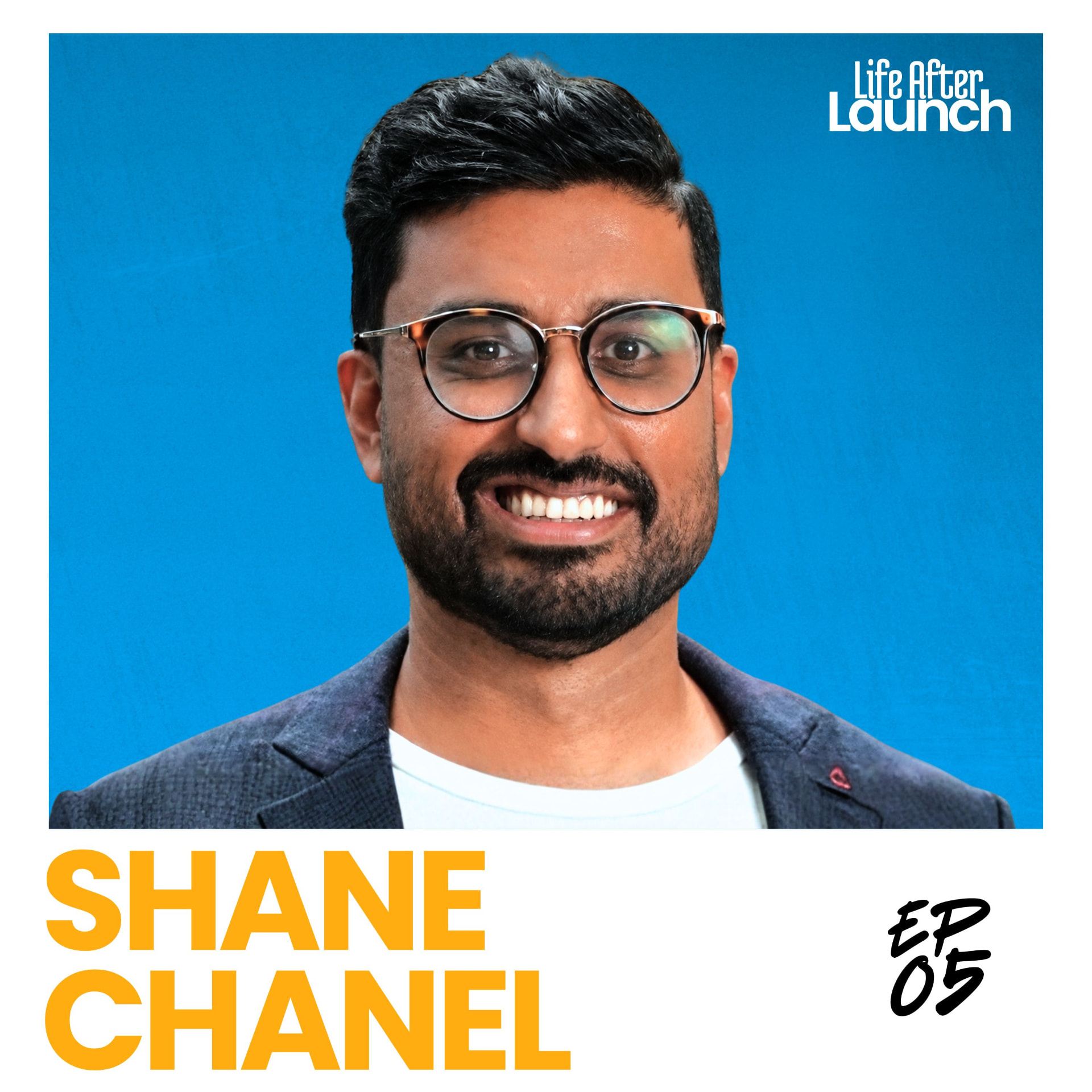
Shane Chanel: This is probably the craziest story that I'm ever going to have in my life, and I've never said this publicly. Um, but yeah, in 2012, we had a scenario, uh, where, yeah, my uncle and his family were found dead. You know, you get past that, um, and take the learnings from that, but as the constant reminder, like, Shane, nothing's ever going to be as hard as that day.
Megan: Welcome to Life After Launch, the podcast that takes you inside the hearts and minds of founders navigating the startup world. I'm Megan Luttrell. I run Aussie Founders Club, a community for founders, operators, and investors, and Kairos Recruitment, a company supporting startups and scale-ups.
Geo: Hi, I'm Geo George, partner at Mayfly Ventures. We're a venture studio building industry-focused AI and software ventures.
Megan: This is Life After Launch from Aussie Founders Club. We cut through the startup noise with unscripted stories and tactical advice from the founders who have built before us. This show is about what happens after you launch, the business lessons, the life lessons, and everything in between. That's Life After Launch.
Geo: Today we're joined by Shane Chanel, co-founder of Yondr and Kobble.
Geo: He bet his entire life savings on a racing app at 14, walked away from a stockbroking career to start a digital bank, and now he's built Kobble AI, the infrastructure that lets just about anyone build a financial product.
Geo: And the through line with Shane isn't a business model, it's resilience.
Geo: And it's fair to say a pretty big chip on the shoulder.
Megan: What you heard at the top is a story Shane has never told publicly. The day in 2012 that reset what hard means for him. Along the way from being the 14-year-old who put every dollar he had into a four-wheel drive racing app, he's dealt with an attempted hostile takeover by one of his own investors, but also picked up the former ANZ CEO as an investor. We wrap up with the hardest lesson he's learned building all of this, so hopefully you don't have to learn it the same way. If you're building something right now, you'll want to stick around to the end. Quick note before we get into it. If you've been with us from episode 1, you'll notice this episode is a bit different. Narration, new segments. We're treating this podcast like the way we treat any early-stage startup, shipping before we're perfect, listening and iterating. If you've got feedback, we want to hear it. You can Slack us in the community or you can send us a message on LinkedIn. You might also notice a jump in our numbers that we quote. This podcast has been a year in the making, and while we've been recording, the community's kept growing. We're now at 4,600 newsletter subscribers and over 2,000 founders and operators in our Slack. If you're not one of them yet, the links are in the show notes.
Megan: You've told us you knew at 16 you wanted to be a financial planner. A, who grows up and wants to be a financial planner? And B, where did that come from?
Shane Chanel: Yeah, look, I actually wanted to be an engineer. I wanted to grow up being an aeronautical engineer. My dad used to work for Air Pacific and used to do international flights. And so born in Fiji, grew up there, moved here when I was 10. And so, you know, we were very lucky growing up. We used to be able to jump on free flights, or you're on standby effectively. And it was very lucky back then, there's no restrictions to go into the cockpit, etc. And there used to be these aeronautical engineers, right? So you've got your pilot, your co-pilot, and an engineer. And there's this one fellow in particular, I absolutely loved him. He was so awesome, like play games with me and then he's asleep half the time. I was like, dude, how cool of a job is this, right? You're in the sky, you're, you know, you've got this amazing view and you sleep half the time. Like, you know, when you grow up, you're like, Dad was away a lot, you know? And thinking about my family, I think we all had that ideal plan. When did you guys think you were, you know, going to get married and have kids when you were 16?
Megan: Oh yeah, that was well before. Now I'm 34 and I'm thinking I need to freeze my eggs. So yeah.
Shane Chanel: Yeah, I was, you know, I was like, yep, find a girlfriend when I'm in uni and then get married at 24, 25, have kids soon after. Yeah, that clearly didn't happen. But yeah, we've got a boy on the way which is due in a couple of weeks.
Megan: That is crazy. So I mean, getting ahead of ourselves, but you've got a new business on the way and a new child on the way, or like a new branch of your business. How exciting. So you wanted to be a nautical -
Shane Chanel: Wait, aeronautical engineer.
Megan: Aeronautical engineer. How did that switch lines to getting into financial planning? Yeah.
Shane Chanel: So then I was like, oh, I don't want to be away from home all the time, so I don't want to become a pilot. And yeah, there was a couple of people I looked up to and they were in the finance space. So I thought, okay, well, financial planning looks like it's for me. And because I really wanted to just help people grow their wealth, right? And sort of learn through the process. But then you get into financial planning and then you realise, okay, that's maybe 40% of your job and then you're selling insurance for the rest of the time. So then I was like, okay, well, what's next? I actually ended up calling one of the stockbroking advisory firms in Sydney and ended up getting what I asked for, for the managing director. And the person at the front desk would have been like, oh yeah, cool, he seems confident enough to know him. And I was like, I've seen a role they've advertised. Can I have a chat to you about it? And he's like, all right, we'll fly up to Sydney next week and we can discuss.
Geo: Is this while you were sort of working in financial advisory?
Shane Chanel: Right. Okay. And then I flew up the next week and then he was like, yeah, cool. Do you want to start next week? And I was like, oh, okay. Yeah, cool. I'll just leave my life in Melbourne and then move up to Sydney. So yeah, that was awesome. I got into the advisory side of things and asset management. IPOs, a couple of raisings on the listed side of things, and pre-IPOs, right? Which is quite interesting.
Geo: So, okay, so you did this for a couple of years. What kind of motivated you to stay on? I think you stayed on for 5 years with one company. Was it the sort of the puzzle solving? Was it the interaction with the clients or was it totally something else?
Shane Chanel: Yeah, it was that. Look, as part of that role, I think one of the most interesting things was we were interviewing CEOs as well before reporting season, which is the most important time of the year. That's what the company's been up to for the past 6 to 12 months and really getting insights of how they think. And especially with the ASX, I guess is what we were closest to, just really understanding what each business is doing. I knew something about pretty much all 200 companies, right? Which was, uh, yeah, really insightful. Really enjoyed that component, you know, just like getting behind the scenes and seeing how they interact and what they can and can't say.
Megan: Do you think it's like something that, uh, you're speaking to that I feel like I resonate with is in a role like what you did - for me it was recruitment - you can see the outcomes of what you're doing. So you can actually see the measurable result of the work that you're doing, which if you've got the right founder mind is which is actually half the thing. I mean, you're a founder before you're a founder, right, that you chase. But also for me it was like talking to Telstra and NAB and knowing what's happening inside of there, like having a bit of the secrets going on. Yeah.
Shane Chanel: I've thought about, you know, how I want to like raise my son and what if he's got, you know, even half of my business acumen or at least a desire for, you know, for entrepreneurship. And I was thinking, okay, well, how do I get him exposure to as many businesses as I can? Is it a lawyer who works on multiple deals or investment banking that, you know, you work on, again, multiple deals? And or is it like a Bain advisory consultancy, right, where again, you're so involved setting the strategic direction of so many businesses? Yeah, it's something that I've pondered upon. And with this new world of AI, who knows, right? Because there's so much that happens behind the scenes that the normal people don't get privy to.
Geo: So somewhere in the middle of asking Shane about his career, he turned the question back on me, one that I get asked quite a bit. What followed was a conversation about being asked where you're really from and whether you belong in the room. And of course, that chip on the shoulder that so many founders carry with them. Shane's take? Don't let it become your reality. Just work twice as hard.
Shane Chanel: I was going to ask you a question, Geo.
Geo: Oh, we're switching the tables. Okay, okay.
Shane Chanel: Have you, you know, your name, pretty, pretty, uh, Australian name, right? Uh, and, uh, you sound very Australian. Have you ever been mistaken for not being Australian?
Geo: Yeah, I get that all the time. Like, and especially when you go traveling, you know, because here I think it's easier to explain. Like, you know, yes, I've got a little bit of a different name. I don't look Australian, you know, um, whatever that means. But when you go traveling, and you're like, yeah, I'm from Australia because that's all I've known and that's, you know, my entire identity, people are like, no, but where are you really from?
Megan: Yeah.
Geo: So it's definitely something that I've struggled with, and that sense of identity. I think I've come to peace with it now and being okay with the duality of like, sure, I've got an Indian cultural background and heritage, but in terms of my identity and how I identify, I identify as Australian.
Megan: Yeah.
Geo: So for me, I've kind of come to peace. Yeah. What's the reason you asked?
Shane Chanel: The reason why I asked, I find humour in it, to be fair. Right. I had a client that I was managing a couple of million dollars for who lived up in Central Coast, and I hadn't met him because, you know, we were dealing with him over the phone. He didn't know what I looked like. He just heard my voice. And he goes, Shane, I'm going to be in Sydney next week. You free to catch up? Right. And I was like, yeah, no worries, John, come in. So he comes in, receptionist sits him down in the boardroom, and I walk in. I'm like, hey, John, how are you? Right? Like, oh, good, good. Just waiting for Shane. And I absolutely loved that component of it. But look, I guess, you know, we're a diverse country and it's awesome, right? Everyone's just accepted.
Geo: And yeah, is that something that you thought about often in your role? Like, you'd be meeting with a lot of people and networking would be a big part of what you did. Did that, you know, that identity clash or, are you Australian, kind of come up often?
Shane Chanel: Yeah, look, I definitely felt the psychology of, you know, do I belong or not? Am I going to be accepted or not? A few times, but I've never really let it block me. Like, I mean, you just don't let it become your reality, right? At the end of the day, like, and the more you talk about it, the more you kind of enable it. So put that aside. If you're brilliant, you're going to make it regardless. Just make sure you're, you know, 2 times - you work 2 times harder than anyone else, right?
Megan: Yeah.
Geo: Every good founder that I know kind of has this chip on their shoulder. You know, it might be as a result of culture and identity, or it might be something totally different. But it is a bit of a universal trait that I've come across in entrepreneurs that like they've got this chip on the shoulder that they need to prove something, or it's sort of a reason that tends to drive them. And that seems to be the case with you as well.
Shane Chanel: I don't know where it comes from, to be fair. Uh, my dad's quite entrepreneurial, but my mum and brother completely the other way, right? And I guess when you're growing up, we didn't come from a wealthy family. Parents worked really hard. My dad's dad passed away when he was 21, and he had 7 brothers and sisters, and the youngest was, I think, 3. So he was studying and he had to leave school to work so the family could put food on the table. A couple of the oldest brothers did that. So, you know, I guess you get brought up with that and see that journey. And I've just been desperate to make sure that they are comfortable. It's not even about me. Like, I don't even care what the - I've never chased money ever. It's just been a consequence of, you know, I guess what we've meant to me.
Megan: And 2 questions from that. I think I have a chip on my shoulder, which like, which means that I'm there to like, my whole life is about proving myself. So if I've gone into a role, then I want to be like great at what I do. And that's not necessarily because of the money. It's to prove to somebody that I'm good at what I do. And then the money does flow and it's more about like a piece of integrity. It's like proving yourself. I wonder if you resonate with that at all. Like, I'm going to go do a good job and then the money just flows because you've got values that lean into that. Or does that resonate? Or is it - do you think it's something else? Why do you even - yeah, what drives you?
Shane Chanel: That's such a good question.
Megan: Why did you even - actually, better question. So you've spent 5 years working for someone. What made you leave to go do your own thing? Or is there a job in between as well?
Shane Chanel: Yeah, no, that was straight.
Megan: Yeah.
Shane Chanel: Pivot from there. I guess inherently it's like your why, right? And I'm such a firm believer of if you don't know what your why is, you'll never be able to succeed in anything and wake up in the morning and really grind. Right. And look, I guess for me, my why is, I don't know, I've always just wanted to make an impact, right? Whatever it is, I'm always passionate about it. Right. The general sense of winning. You know, you don't always win and nothing wrong with losing, but it doesn't matter. Like, I am competitive. I will want to - like, if we're playing a game of cards and I lose, I want to keep playing until I win, right?
Megan: And if I'm not good at it, I won't do it then because I can't lose.
Shane Chanel: Exactly. And also like a bit of a people pleaser as well in some aspects. I think that's really wound back a lot over the last few years. Uh, especially once you get shoved into corners and you have to fight your way out. I can't be that Mr. Nice Guy anymore, you know. Like, I used to walk home from school, and my mum's office was in Suva, in the city, and it's like a 10-minute walk. And as a 6-year-old kid, whenever I saw a homeless person or whatever the case was, right, there's this one lady I gave her 10 cents every time I saw her. And for me, like, as a 6-year-old kid, the 10 cents is a lot, you know what I mean? And in Fiji, that was a lot. So, and that's something that really drives me, uh, especially with Guardians of the Pacific, which is the charity that we founded. And the heart for that is really - so we support 3 orphanages in Fiji, right? And what really struck me was, it was 2 things, right? Being able to teach them how to fish as opposed to giving them -
Megan: Fish.
Shane Chanel: Giving them fish. So 2 things we do is help with education. And the other thing is providing mentorship, right? So there's about 18 Fijian kids who are all part of the Guardians of the Pacific and there's doctors, lawyers, people in finance, whatever their origins may be or their professions may be. But the whole purpose of it is if someone comes to us with a, hey, I want to be a pilot, connect them with someone who's a pilot and help them with the path. Because ultimately they don't have a mentor to turn to most of the time. The figures that they've got around them is consistently feeling sorry for them. And if you're gonna have that attitude, guess what? They're never gonna get anywhere, right?
Megan: So before the bank, before any of it, Shane was a small business kid. He was working in his dad's four-wheel drive business from 13 - sales, marketing, bookkeeping, IT, whatever the day needed. The training that you can't buy, learning to do everything from scratch. And by 14, he'd put 20 grand, his entire life savings, into a four-wheel drive racing app. Who even has 20 grand when they're 14? Anyway, most founders never make a bet that big, and Shane made it before he could even drive.
Megan: What actually led you to start building out your first business, leaving, cutting the ties on the corporate job you had and going to go build that new venture out?
Shane Chanel: Look, I was working for Dad since I was 13 years of age, right? Like holiday jobs, even after work, after school sometimes. And I've always been surrounded by that. And you know what? That's probably the biggest skill set that any founder can be taught. Small business, having to do everything from scratch. Real, you're doing IT, whether you're doing marketing, you're doing HR, you're doing everything, right? Sales. The tax, all the bookkeeping. It's not easy to learn that. You learn that over years and make mistakes through that journey. But actually the first business I ever started was when I was 14. Started my own, it was a 4-wheel drive racing app that I spent my life savings on at that point. Spent 20 grand when I was 14. It was everything I had.
Geo: You had 20 grand when you were 14? That's incredible.
Megan: Wow.
Geo: That's all the 10 cents that you made.
Megan: It wasn't until recently I had 20 grand in my bank account.
Shane Chanel: Yeah. So I used to work for Dad and he used to give me pocket money effectively. Right.
Geo: So it's a pretty high conviction bet to bet 100% of your net worth. To a four-wheel drive app. Okay. And is that because you were interested in four-wheel drive? You think there was an opportunity there?
Shane Chanel: Like - yeah. So Dad's business is in the four-wheel drive industry and just -
Megan: What did the app do?
Shane Chanel: So it was like a racing app.
Megan: Oh, just like a game?
Shane Chanel: Yeah, I think of like, you know, the big like monster trucks. Yeah, it was a little bit like that, but it was like in a Need for Speed style experience where you do jumps and all that sort of stuff. And it was pretty cool, like it had a few thousand downloads and yeah, but made a lot of mistakes right through it as well. Like paid to build it but wasn't really supporting it, you know.
Megan: It's by far the most ambitious like early business though that we've heard from the founders and we've talked to some good ones. So you've got that notch on your belt. Okay, so you've had a history of like watching your father be an entrepreneur and then you've gone and done this crazy thing when you're 14 that not many 14 - well, now they do, but like 14-year-olds back when we were young. Yeah. Your first business is a bank.
Shane Chanel: Why?
Megan: Like, how the hell do you come up with that idea? Yeah, I would never think I'm going to start a bank.
Shane Chanel: When I told my parents, hey, Mum and Dad, I'm going to leave my asset management role and start a bank, they were like, you're what?
Megan: And where does that idea even come from?
Geo: Yeah, like, walk us through how you actually got to that point. Did you just wake up one day and I'm going to start a bank?
Shane Chanel: Yeah, look, it was a multitude of things. You know, living in a shared house in Sydney, we're trying to like through payments and split payments. And, you know, we're trying to get an account set up. It was just absolute pain. So that was one part of it. Obviously, you know, being quite active with my commentary that was going out to the media as well. That was another component of it. Like when I was on TV a couple of times talking about, you know, what NAB's doing with their report and a few of the other banks. Right. So it was an area of interest to me generally and I was also looking at what was happening in Europe. So in Europe, you know, you had Revolut and Monzo and N26 that had just launched in 2015, 2016. APRA had just launched their new restricted banking license scheme, which we actually applied for. We got pretty far down the process before we decided to pull the application. Right. Before financing. Right.
Geo: So, why a bank? Well, a few things were stacking up all at once. The share house in Sydney, where splitting a bill was harder than it had any right to be. The TV spots pulling apart the big banks' results. Over in Europe, Revolut, Monzo, and N26 were proving that customers would actually rave about a bank. And then APRA finally opening the door for a restricted banking license, the first real pathway for a new entrant in a decade. So, still, it was just an idea. That is until Shane took it to two of his mentors, and one of them said he had raised exactly this point with the Minister of Finance only months earlier.
Geo: Okay, let's make it happen.
Shane Chanel: Yeah, so had a bunch of pain points seeing what's happening in Europe. You know, these awesome experiences that customers are raving about. The other thing was, I guess, the opportunity at the time, right? The regulator hadn't introduced a framework that allowed for early entrants before. And so that was introduced in March 2018. So like, okay, well, there's a few things that are lining up now. And I reached out to a couple of my mentors, you know, that I looked up to very highly, very successful individuals. One is now heading assets as the CEO of Bank of New York, and one is just a very successful individual. He's also a serial entrepreneur, owns a mine, owns a recycling facility, fisheries. Anyway, a bit wild. But I reached out to both of them and yeah, so one of them was like, Shane, spoke to Minister of Finance about this a few months ago. You need to make this happen. And I'm just like, oh, oh, okay, right. Like, that was just an idea at that point, right? And I think it was the encouragement of the validation of the idea, um, that like, ah, just started taking more seriously, put a bit of a plan together, and then, you know, started applying for the license with APRA. And I think, you know, we shocked APRA with our first meeting.
Shane Chanel: And I was like, wow, I'm never doing that ever again because something I was quite passionate about, I got quite lucky at the back end of my ASX career. So I was part of the media team, so I was one of the advisors and then I'd do commentary every morning of 5 things that would move the market that day. And it was some of the best times of my life because I just like I knew everything that was going on in the world and I could call what would happen next because I was just so in tune. And I find that so intriguing, just getting to the bottom of what and why. Yeah. So that was probably the interesting part for me, but also just learning about the whole world of investments and helping other people grow their wealth. I had one of my clients, if you will, and funnily enough, he didn't actually have his money with me, but he'd call me every month and be like, hey Shane, what are 2 companies you're liking the most? And would give him a couple of recommendations. At the end of the year, he sent me a blue label and he goes, Shane, thank you so much for the year. Do you have any idea how much I've made this year? How much? Made 140% on his investment.
Megan: Amazing. And that's not because you manage his money, but because you keep giving him tips.
Shane Chanel: He made more money than I was doing for managing my own portfolios. Right. And because he was just taking heavy hits into 2 of my most strongest positions that I was giving him. And whereas, you know, we had to have a diversified portfolio, right? Modern portfolio theory suggests that you need to have a certain amount of diversity across sectors, and yeah. So anyway, the economics of it all is really interesting.
Geo: The blue label seems almost a little bit cheap, you know, for 140% return.
Shane Chanel: Tell me about it, right?
Megan: Oh, blue label is in a bottle of alcohol.
Geo: Yeah.
Megan: Ah, I didn't know what that was, and I was like, I'm gonna just sit here and be quiet. But um, yeah, no, that is cheap. He should at least taken you out to like a really fancy dinner or something.
Geo: Time to hit him back.
Megan: Okay, enough stock tips. Time to get into the thing that Shane left it all behind to build. So what exactly was Yondr?
Shane Chanel: Yeah, so the concept of Yondr was just to provide a far superior digital banking experience. And the big change that we were seeing at that time was all of a sudden, you know, you've got a phone in your hand which became your branch, right? And up to today, you didn't have that opportunity, right? So all of a sudden, you've got technology now that can enable an environment where, you know, you didn't have to go into a branch to be able to open a bank account or do any of those sort of things. And you can verify identity digitally and then, you know, provide all these cool experiences, right? So in terms of actual cost of running the organization and cost per client, cost per customer, right? So when we went through all the modeling and modeled it against the big banks, we were close to like a 30th of the cost, right? That was the cost per client. So hypothetically, using those sort of numbers, if it's costing us $10 and it's costing someone else $300, and I'm talking incumbents, someone's paying for that, right? The customer's paying for that. So if we could just pass that on to the customer and reward the customer instead, how much better is that, right? And also then give them a whole bunch of cool new experiences. We're not pushing the innovation envelope. And yeah, I think that's been the one thing. And the UK has been a really good learning domain for digital banking in general. You've got a number of big players that are massive now, right? Revolut is now making so much bank that every bank in the country, not just in Australia, but everywhere they operate, should be quaking in their boots.
Geo: So did you feel like you were the guy to start the new bank?
Shane Chanel: Absolutely. Yeah.
Megan: Did you do it on your own? Like, did you - who was the founding team?
Shane Chanel: Yeah, I mean, there was a group of people that I met through, I guess, the journeys of life. 3 of them had worked on various card products previously, and then a couple were quite high up in a bank, operations. And yeah, so it was a matter of bringing them all into a room and just nutting it all out. Right. And you've got so many different things, moving parts that are happening behind the scenes. And this is why it's been so difficult for banks to actually get stood up in Australia. Right. We went through the entire journey from not just operations, but also, you know, the tech, all the integrations and risk and compliance, reporting, continuity, which is security. Think of everything, licensing. There's just so much that is happening. There is not even 10 people would be able to have the expertise to be able to deliver that. And when it's like saying to a big car manufacturer now, hey Volkswagen, now just be the best at EVs. And you've seen that transition take 10 years now, right? You've got the new players that are innovating that are just able to move so much faster, thinking about it from a new lens, that are just doing it so much better.
Geo: Yeah, because you're building from first principles, right? Hey, so did you quit your job straight away because, you know, you're the CEO of a bank now, or was it like a more gradual process?
Shane Chanel: Yeah, look, probably 2 months in, I did, and I regret that. I do, because I thought by taking this on, I'm going to be so much more productive. And look, founder lesson 101, the busier you are, the more productive you are. That's the reality. So I definitely could have stayed on in that role for at least another 6 to 8 months before moving on.
Megan: But you're in for your next round of that when you have your child, and the busier you are, the more you're going to get done. So hopefully that flows through to that. Okay, so you have started going through the process to get your financial license. You mentioned that you dropped out of that process, and that's when you met Mike Smith. Why did you drop out of that process?
Shane Chanel: Look, um, probably don't want to say and, uh, you know, talk negatively about regulators. But it's a learning. And the most political way of being able to say this is it's a learning for everybody, right? It's not just we're not taking that journey as innovators, but we're taking the regulators through that journey, right? But ultimately, the regulator wasn't comfortable with cloud-native solutions, the core underlying platform. So I don't know if you know this, but the banks don't own their core infrastructure. Right. So they all use someone like a SAP or an Oracle or Temenos or, you know, one of these sort of core banking providers. Then they build their own operations systems on top of that - CRM, marketing workflows, finance capabilities all around that. Right. So the underlying core, there's only a few that are regulated throughout the world. And getting the regulator comfortable with these. So it was also getting the regulator comfortable with new ways of working. And one of the things that were being asked of us was, where's your physical server? We want to be able to go and inspect the physical server, which is when you're a cloud-native platform, like, oh yeah, it's at the Southeast AWS facility and it's in server number 102. How do you say that? Even if Amazon gave you dedicated servers, it's - yeah. So look, again, it's a learning journey, right? And it's taking everyone through that so we can actually let innovation thrive.
Megan: So how did you work around that if you're pulling out of the process? So then how did the bank come to be? As somebody who doesn't know, how does the bank work?
Shane Chanel: So we never became a bank.
Megan: Yeah. Okay.
Shane Chanel: And never want to be a bank. It's way too much oversight and red tape that it actually is anti-innovation. Yeah. Anyway, so partnering with a bank and getting them to hold deposits and having trust accounts and safeguarding customer funds that way means that you can then continue to innovate and sort of wrap around.
Megan: I think about this a lot because I had a friend who went and worked as a product designer in one of the big banks. And I've also just been listening to a podcast about a loophole - have you heard about The Glitch? The Glitch is this podcast about a guy who found out there was a glitch on his EFTPOS card. And between the hours of 2 and 3 AM, he was able to transfer money between his accounts and he ended up taking about $1.6 million.
Geo: Didn't he go to prison 'cause he turned himself in?
Megan: Yeah, he basically went to the media 'cause he just felt like one day this other shoe was gonna drop. Anyway, that same bank, so if you look up what that bank was, my friend went and worked at, product designer, can't access Figma online, can't access LinkedIn Messenger online. Like how are you meant to innovate when you can't even access these things online 'cause your security is so tough? So it creates this space of innovators outside of these big 4 banks.
Shane Chanel: I think that's probably the scariest thing, right? Like you've got Revolut that's really kicking goals at a retail customer level and business customer level. And then you've got Wise and Airwallex, which is just dominating business banking, right? And then you've got other players that are really starting to take other aspects of the point of sale side of things away and your Zellers and your Squares of the world. And then there's all these other players that are now starting to innovate and slowly chipping away. Right. And unfortunately, if you were to ask me what happens in 10 years from now, it's - look, unfortunately, the big banks won't be able to keep up.
Megan: They won't.
Geo: Do you feel like you needed to bring the legacy banks along on the journey? Like, I know one of your board members was the ex-CEO of ANZ. Like, first off, how did that relationship even come about? And how do you as a first-time founder convince someone like that to join your little outfit?
Shane Chanel: Yeah, yeah. Look, that was one of my happiest moments, right? When I left, like, I don't think I've allowed myself to celebrate much, right? It's like whenever you achieve something, like, cool, what's next? Cool, what's next? Right. And I remember I met Mike at a networking event and really had like 30 seconds, right? It's like, Mike, building a bank, would love to talk to you about it when you're free. Right. That was the basis of the conversation. And he puts me in touch with his -
Megan: Probably just pure intrigue at this point. Like, this young guy is building a bank. Let's give him like 2 minutes.
Shane Chanel: Exactly. Yeah. So caught up with him, explained what we're doing, where I guess our focus is still very much in that underserved markets, right? Where everyone's trying to go for the big sexy markets. I don't care about big sexy markets at all. We're looking at where there's no one playing. And, you know, I think that resonated with him because he was really behind that Asian expansion. Where it makes total sense, though, because you've got this part of the world where the GDP is growing aggressively at twice or 3 times the rate of some Western countries. Right. And in 10 years' time, that compounded is just phenomenal. You can't imagine that scale. But yeah, we caught up with him twice before. 3 months I didn't hear from him and all of a sudden his PA calls me and is like, oh yeah, cool, Mike's happy to invest.
Megan: Amazing. And so you mentioned you guys were going after underserved markets and he was really keen on that. So your ICP or your customer base? Who were you going after at the time? It's international markets and -
Shane Chanel: Well, I mean, I guess you've just got to start somewhere. And get it right. And the good thing about Australia is you are very highly regulated, right? Anything you do, you know, can end you up in a lot of trouble. So it's great for other markets because they see Australia as a fairly, you know, high red tape country. And so we've had to put a lot of structures in place to manage risk and business continuity and the rest of it. But also, I mean, I don't know if you guys know this, but Australia has the highest dollar invested to unicorn status in the world.
Megan: I do know that. I've written a blog last week about it because I think that the money tends to go into the same pockets repetitively. So I think we have capital efficiency. I don't think we have - we're not capital rich though.
Shane Chanel: We're absolutely not.
Megan: So I mean, a great stat to say, but a lot of people can't access that capital. Anyway, just a little rant.
Shane Chanel: But, you know, like it teaches you to be scrappy and frugal, right? Like we've had to be so scrappy and frugal and so creative. Like, you know, I've been pushed to the boundary and over many times, right? Literally walking the edge. There's so many times we're like, I don't know if I'll be able to pay the bills tomorrow.
Geo: That's a kind of stress that founders deal with, that it's hard to explain. It's hard to explain the immense amount of pressure and burden that founders carry along, like payroll.
Megan: And everyone in this room, because we've built this business, I know that you have. I have. Yeah, it's crazy.
Geo: So I think there's a certain quality that a person needs in order to get through that. Yeah, like for you, where does the strength to keep going come from?
Megan: Is it the winning? Because I felt like I was going to push through that to win - but also not to put words in your mouth.
Shane Chanel: No, look, I think there's a variety of life circumstances that really molds you, right? Um, and not in the healthiest ways either. I've built some very bad habits, if you will, from traumas that I've had in my life, right? And look, this is probably the craziest story that I'm ever gonna have in my life, and I've never said this publicly. But yeah, in 2012 we had a scenario, uh, where, yeah, my uncle and his family were found dead. Right. Um, and I was next of kin for my little baby niece. And, um, you know, I only got told because her babysitter was like, hey, she hasn't been in for a couple of days. Right. My niece. Um, and so I called my mum and said, hey, have you heard from my uncle? Um, and I had a graduation party that weekend. It's like, oh, well, saw him on Saturday and dropped cake to him. Um, I was like, all right, well, I'm gonna go and check. Uh, anyway, fast forwarding the situation, got to the place and, uh, a couple of newspapers out the front, no cars in the driveway, everything's locked up. I tried to jump the fence and get to the back door. Luckily, I wasn't able to get in there. Thank fuck for that. Um, cause that would have just probably destroyed me for life, but, um, effectively, um, murder suicide. Um, and, uh, you know, that weight, uh, I guess so. So I've never felt so anxious in my life.
Megan: In the same way.
Shane Chanel: I've never actually knew, and touch wood, I had a really good childhood, you know, like really spoiled with love. Um, and I actually didn't know what people meant when they said they were anxious until, you know, these moments onwards. Um, and so I had 2 cousins, um, and the older cousin who was in primary school. So, you know, I called the cops because I couldn't get in and didn't know what was going on. No one could contact them. Uh, and yeah, rushed to his primary school and back. And they wouldn't tell me where he is because I wasn't a contact for him. Um, and yeah, it was pretty crazy because I was back within 10 minutes. Cops were already there, right? You know, so, you know, just, I guess waiting to hear if they've found anyone or not. Right. Like, so, you know, they jumped the fence and must've got in, but they're not telling us anything. Right. Like 10, 15 minutes has gone by. Um, and then they cordoned off the front of the house. I'm like, have you got anyone yet? Uh, and they're like, don't know yet. Right. Um, and then they cordon off the street, you know, uh, and yeah, there's detectives, undercover cop cars rock up, right? A couple of detectives out of each one. And they're like, dude, what's going on? Like, you know, have you got anyone yet? Uh, and then eventually, it felt like hours, but I'm sure it was like 20 minutes or something, right? Where it's like, we've got 4 bodies in there. And that wasn't the hardest day of my life. It was actually a few days later when 4 hearses came down the road, right? When you see them, and I've never had a scenario where I've just been so angry at God and just been angry at the world, right? Like it's, uh, yeah. And look, I never took time off. Dad had a small business, mum obviously, and obviously the family was devastated and nonfunctional for a little while. Um, so, you know, with dad's business, someone had to go and be there, right?
Megan: Where were you in your journey? So is this like 2012? Were you working? Were you studying?
Shane Chanel: Yeah, I was still in uni actually. Or just finished uni. Yeah. Um, and I was still working for dad full-time. Uh, and yeah, I was like, oh, from do I take over the family business or, uh, yeah, until, I mean, dad just couldn't see eye to eye, right? Like I had all the ambition in the world. Dad was like, if it ain't broke, why fix it sort of thing. Um, and yeah, we ended up parting ways after about a year or so. But yeah, I think that definitely built a lot of resilience. You get past that and take the learnings from that. But as the constant reminder, like, Shane, nothing's ever gonna be as hard as that day.
Megan: Yeah. And there's so much you have to process from that, that you build up mental resilience from that.
Geo: I think once you deal with the futility of a situation like that, in a way, you can always have that as a reference point of like when something was so outta your control and so terrible. That if you can get through something like that, there's not much that you can't get through.
Shane Chanel: Yeah.
Megan: I wonder if it also drives you to build a bit of life for yourself as well - yeah, I don't know.
Shane Chanel: Yeah. So then I guess you go from there and then it's like, life's short, right? Pardon my French. And you're like, you know what, I want to push the comfort zone all the time. And I mean, I don't know what it was like with your partners and relationships. But dude, I'm not the easiest partner in the world, right? I don't know how your partner takes your level of ambition.
Megan: Yeah, there was one stage where my partner broke up with me on this job while I was going through this for less than 24 hours. But I think there was a clear sign it was taking a toll on them as well.
Shane Chanel: Yeah, yeah.
Geo: So Shane, there's a lot of tough times I'm sure that you spent on building Yondr, but since then you've gone on to do some pretty cool stuff, like there was an acquisition involved there. Tell us about that. Like, how did you as a small startup acquire another company?
Shane Chanel: Yeah, uh, look, I guess it's just, you know, A, being creative, and B, uh, there's 2 ways of growth, right? You either grow organically or you acquire a business that has adjacent customers. Um, and this was a combination of 2 things. Uh, so through the founder journey building Yondr, right? It was quite a difficult process, even though, you know, not many people have built digital payment, digital banking businesses in Australia. And going through that, you know, getting all the licensing, building the tech, building infrastructure, building all the partnerships and everything else you've got to do to actually get a product out. We spend as fintech founders and hopefully this is not the case in many other industries, probably besides biotech, where it's such a high barrier of entry.
Megan: Yeah, like building financial services is the same as deep tech where you're really spending years and years before you can really see the return as well.
Shane Chanel: Absolutely. Yeah. And, you know, the government keeps talking about productivity, productivity, productivity. The only way we're going to see that is by entrepreneurs actually driving innovation and building tools that create productivity. Right. So I guess going through that journey, there was a bunch of founders would catch up for breakfast every few months and we're all complaining, right? We're using different card issuers, we're using different providers, and we're all like, we can't do this. You know, we're having issues with this. Like, we had to plug in external providers to be able to do better KYC because we weren't happy with what was out of the box. Right. And there's so many little things that come up through that journey. It's like, man, this is really, really difficult, right? Like, why isn't someone fixing this? And all of us founders in this group were saying the same thing. So I was like, we're going to do something about this. And the 3 of us ended up getting together and being like, all right, we're going to do something. And that's how Kobble was built. So we had a wall full of all the pain points that we're experiencing building digital products and having digital products in market. Like, dude, all of this needs to be solved. And that was the genesis of Kobble, right? So I didn't want all founders to be going through the same thing that we went through.
Geo: Wait, you were building Yondr at the time - okay, so you hadn't gone to market yet?
Shane Chanel: No, no, we were already in market for about 12 months at that point.
Geo: And then there was an acquisition for Shouta and you said that was like a way to grow through acquiring their customers. Was that a difficult process in terms of one startup acquiring another smaller startup? Because early-stage startups don't often engage in M&A activity, especially where you're actually buying up another company. So what was that process like?
Shane Chanel: Yeah. So through that journey of building Kobble. So one of the businesses was Shouta, right? And Shouta was like, look, you know, we actually really like what you're doing. There's heaps of strategic opportunity moving forward. Why don't we work closer together? And like, yeah, okay, cool. We explored that and the board was like, yep, on board with it. So we went through the DD process, which going through that, we can now DD a company much easier. And I'm sure AI can also help with that. But like, we're really keen on far more M&A. We're actually in the process of 2 M&As right now.
Geo: Cool.
Shane Chanel: So touch wood, you know, all things going well over the next 6 months, we'll have some form of announcements around a couple of opportunities that are coming up, right, that we're about to close.
Geo: Very exciting. So had you been building Kobble the whole way through? Is Kobble the kind of the infrastructure that helped you do Yondr plus Shouta and the other things that you're working on?
Shane Chanel: Well, you see, that's the beauty of Kobble now, right? Like, we have such a deep capability set where we can service so many different industries and sectors.
Geo: Did you acquire Shouta before building Kobble, or had you been working simultaneously?
Shane Chanel: Kobble was Kobbled together.
Megan: Oh, okay. I think I get it too.
Geo: I think that now makes sense. Okay. Quick pit stop because the timelines get a little bit confusing. Here's the order. Yondr came first, the digital bank. Building it surfaced up a wall of pain points, a literal room plastered in Post-it notes with every fintech founder around that table having the same pains. Those pain points became Kobble, the bank in a box. Shouta was a fellow founder's business that they acquired along the way, and Kobble has now been live for about 18 months, doing a few million dollars in transactions a day. So Kobble AI is the newest piece, the one launching now. Okay, let's get back to it.
Shane Chanel: Yeah, so effectively, you know, out of the bunch of founders that used to come to the breakfast, 3 of us were like, yeah, we've got too many pain points, we've got to solve for it.
Megan: This needs to be easier.
Shane Chanel: This needs to be way easier. We're struggling. And look, there's fundamental things that were broken through the ecosystem that Kobble has solved for now, right? So once we plastered all the pain points that we had on the wall, we literally had a massive room full of just Post-it notes. Yeah. Like, wow. That's a lot of problems to solve. Right. And, you know, a lot of things that you probably don't even think about at a foundational level that we're solving for. And I'll give you one example. Joint accounts. So when Up introduced joint accounts, can't remember what the figure Dom quoted, but I think their base increased by 18 or 20% or something within a couple of months.
Megan: I joined Up because it was easy to do a joint account. Yeah, there you go.
Shane Chanel: Right. So no other banking service provider, as far as we know, can provide joint accounts. Right. And it's just little things like that. If you don't think about it at the start and if you haven't built problems before and haven't experienced those problems, you can't solve for those problems, right? And there's hundreds of those little things that we had to solve for. But yet, I guess now everything in Kobble has been designed to enable what took us 2 to 3 years and cost most fintechs would spend maybe $10 million on, at least $2 million depending on how big your team is, et cetera. But the reality is it's so difficult that the barriers of entry is so high. As a founder, all we want to do is a couple of things, right? We just want to focus on the customer, build awesome customer experiences and tech and, you know, innovation in customers' hands and most importantly, make money.
Megan: Basically, you've got a couple of people who have already been dealing with these problems and building their own financial products, come together, built Kobble. So like built to help others build these products a lot easier. Now by the time this comes out, you would have launched it. I'm actually helping you - we're launching - not we, I'm just helping you with the launch party. Um, but you're launching Kobble AI. Can you tell us about that product? Because we know it's going to change sort of what fintech looks like for big businesses who need bills or for smaller businesses who want to incorporate financial products. Tell us about what you're releasing or what would have been released by now.
Shane Chanel: Yeah, yeah. Look, so Kobble has been in market now for 18 months. So we launched that a little while ago and we're doing a few million dollars of transactions a day, which is great. Yeah, I guess moving forward, we then had a bunch of pain points that Kobble had, right? And a part of it is understanding what Kobble can do. At the end of the day, right, we're like a SAP 3.0 where you don't just come to us for core banking platform, you come to us for everything, right? We're effectively a bank in a box that you can take to market within months. But then people always think, oh, you can only service banks. We can actually service, you know, 15 industries, right? And we're already servicing 5 of those industries. And our biggest industries are actually insurance and automotive at the moment. Right. And obviously fintechs as well. So yeah, look what we eliminate. So one of our clients, for example, went live with full end-to-end banking stack in 44 business days.
Megan: Crazy.
Shane Chanel: Think about that, right? 44 business days. Like, I wish I had that.
Megan: Can you give us, just so people can imagine this while they're listening to the podcast, a couple of examples of - I mean, you just said a full banking stack, but a couple of examples of products that Kobble build?
Shane Chanel: Yeah. So a lot of stuff could be around - I don't want to give too much away for, you know, what clients are building at the moment. Especially with certain IP. But imagine fleet cards all attached to a broader sort of tax automation system, right? Like especially, so one of our clients, Karya, is solving a really awesome pain point in the novated lease space, right? Where they audit - so previously the pain points were, I don't know if you've had a novated lease before, but the employer would pay into a novated lease provider's account, and then there's reconciliation, manual reconciliation done in many instances. And then there's expenses for - it could be for servicing, it could be for rego, it could be for financing, right? A variety of different things, fuel, but they're all going after different platforms and then you've got to bring it all to reconcile. It's a nightmare. So effectively using our banking stack, they were able to spin up a BSB account number for each provider and then, you know, automate that entire reconciliation journey. And then with the fleet card solution, then they can attach a card to a specific asset. So rather than the customer paying and then trying to get a refund later, not being able to track it and receipts being lost, it's a massive pain point. Right.
Megan: And you can put this fleet card in like your Apple Wallet.
Shane Chanel: Exactly. So they can touch at and it's restricted just to, you know, fuel stores or automotive stores. Right. So yeah, that's some of the controls we've got. Yeah, there's a whole bunch of opportunities in lending as well, which we're pretty excited about. Superannuation. Insurance is a massive one as well. Travel is a pretty big one too, you know, with travel cards and embedded with specific rewards or insurance products or whatever the case may be.
Megan: And I mean, I know a little bit more about this from having helped you. But the Kobble AI piece of it, the bit that's really cool, is that people can prototype with AI within 10 to 15 minutes, visualize that product within their business, and then you can go off and do the greater builds, which - it sounds to me like Kobble has been almost cannibalizing the processes so you can move faster, do it cheaper, that type of thing. Okay, amazing.
Shane Chanel: Yeah. So look at the pain points that we were experiencing and understanding what Kobble can do. At the end of the day, it's agnostic. Like, I'll give you an example, right? Say Coles and Woolies. They've now got a suite of financial service products where they've got lending to rewards, to payments, to insurance, all sorts of things, right? They didn't have that 10 years ago. Not that depth, at least anyway. So all of a sudden you've got all these retailers. We've had over 200 companies come to us wanting to build product, right? And about 20, 25 ASX-listed companies coming to us for different bits and pieces.
Megan: And yeah, so they can choose to do that because you guys can deliver it faster and cheaper than going to an Accenture and then charging a couple of hundred million dollars to do the build, right?
Shane Chanel: Exactly.
Megan: Yeah. Amazing.
Shane Chanel: Yeah. So what Kobble AI really solves is 2 things, right? The ideation piece, just actually knowing, cool, this is your industry. What are the opportunities that are available to you - what's the problems you're trying to solve, right? Are you trying to increase or introduce a new revenue line for your business? Are you trying to improve customer experiences, right? Are you just trying to make the customer more sticky, don't care about anything else, right? Or are you trying to solve a risk and compliance issue?
Megan: And if people are listening to this and they're starting to think, hey, I would love to explore how a financial product could add a new revenue stream or could improve customer service or whatever - can they just go online and go test this out, prompt it and see what it looks like?
Shane Chanel: Exactly. Yeah. So, you know, having all these 200+ businesses come to us wanting product, they've generally got similar questions. So we generally have to fish the idea, you know, the thoughts out of them. And so we then came up with a bunch of questions that was able to capture that information. So why am I putting together individual proposals when I can actually just help them help themselves?
Megan: Man, I love AI and hate it and I'm scared of it, but love it so much.
Shane Chanel: And, you know, at the end of the day, they've all of a sudden got this prototype in their hands and we sent it to one of the execs that are, you know, one of our advisors. And he's currently the head of a bank, right? Tier 2 bank. And he goes to me, Shane, how did you do this? And I go, what do you mean? My team have told me that this is going to cost me hundreds of millions of dollars and it's going to take us 4 years, but you've just given it to me in my hand with my logo on it, right? How'd you do this? I was like, go back to your team and be like, hey, you could have this in market in, you know, 6 months, uh, because who knows what happens in 4 years, right? Especially with AI, like, the change.
Geo: So, Shane, is the AI the kind of the ideation visualization, like more of a marketing piece? Or can you actually build your banking stack using your AI product?
Shane Chanel: Uh, look, I won't give too much away of what it can and can't do and what future states are going to be. But put it this way, in a fast follow-up, you'll be able to create your own card product and ideally have that branded in your Apple Pay wallet. All within 15 minutes.
Geo: That is genuinely impressive. So yeah, really excited to check it out when it comes out. I am actually going to the event, so very excited.
Megan: This will be in past tense, so we'll put this out and you would have already seen the magic of the AI though. We'll put it in the show notes.
Megan: So at this point, we'd covered the bank, the infrastructure, the AI that's about to put a financial product into anyone's hands. But before we let Shane go, we asked him for the one lesson he would hand to every founder listening. What he landed on came out of one of his toughest chapters, an attempted hostile takeover by an investor who had only just come on board. It's about boundaries and having the uncomfortable conversations early before you need them. So here's the clip. Here's Shane to close us out.
Shane Chanel: One of the challenging parts of Yondr and Kobble was a hostile takeover attempt from an investor.
Megan: This is interesting.
Shane Chanel: It was a newly incoming investor that came to us and look, I won't go bore you with the details of how they did it, but it was well set up, right? The level of greed probably kicked in at some point for them when they recognized that, oh wow, actually we could quickly, rather than make, you know, 5% of the business that might be $1 billion in 2 years, 3 years, we can actually make 100% of that now or 100% of, you know, $20, $30 million now. As a founder, you just got to watch your back consistently and you don't want to be doing that, right? Because you've got so many other issues going on that you've got to manage and your hands are full.
Megan: But it's like doing the prenup right before you get married, even though you don't go into these relationships with the expectation that they're going to blow up.
Shane Chanel: Exactly.
Megan: Always do the prenup.
Geo: That's right.
Megan: Is there a way that you could have avoided the hostile takeover, do you think?
Shane Chanel: Yeah. If I'd done one piece of, well, a couple of things that, you know, one of my advisors had said to do, I was like, I don't want to upset them right now. You know, like they were just coming in. Yeah. So it's like, you've just got to -
Megan: Even if it feels like you're putting someone's - because some of these things you don't want to do because it's uncomfortable, because you might get their back up, because they might have good intention, and you're already saying, I'm just going to protect it through this line.
Geo: You know, the way I interpret that is having the hard conversations early. Yes. And this is something that really resonates with me because I hate to have those conversations around contracts and, you know, what's the worst that could happen. But having those conversations early actually avoids so much more painful stuff down the road.
Shane Chanel: Of course, yeah. And just setting your boundaries, setting expectations, and following up on those expectations, right?
Megan: I spoke to someone as well who went into a co-founder relationship and they both set out the, this is what we're going to do, we're going to build to exit and stuff. You almost need to make that plan, make the worst case scenarios, put it down on paper. So if they do happen, which we hope they don't, you're already protected because you've got something down.
Geo: It's the mature thing to do. Early on in my business journey, I just did not do that stuff. And, you know, there's been many a times where I've regretted not doing it. Now I'm getting a little bit better with it.
Shane Chanel: Yeah. I've just got to be ruthless enough to, like you said, really have those hard conversations.
Megan: So you started off wanting to be an aeronautical engineer. You're now a founder that's just about to release some world-class tech in terms of being able to enable various industries to build financial tech products fast. You've had a hostile takeover. You know, we've gone through quite a bit.
Geo: It's been a journey.
Megan: Yeah. So thanks for sharing your wisdom and your story. I can't wait to see where the next part of your journey goes with Kobble AI. And we'll have to have you back in like 5 years to see, maybe you'll be taking holidays or sitting in the cockpit because you taught yourself how to fly.
Geo: You can buy your own plane.
Megan: Yeah, you'll be allowed in the cockpit when you've bought your own plane.
Shane Chanel: That's true. Yeah, I still want to, you know, I've had a couple of pilot classes, so pretty keen on getting my private license at some point.
Megan: I'm actually not surprised by that at all. Yeah, no, well, thank you so much for coming on the podcast.
Geo: Thanks, Shane.
Megan: It's been a pleasure.
Shane Chanel: Thanks for having me.
Geo: And that's Shane Chanel, the kid who wanted to be an aeronautical engineer, who bet his entire life savings on a racing app at 14, who then set out to build a bank, survived a hostile takeover, and ended up building the rails that lets anyone build a financial product.
Megan: By the time you hear this, Kobble AI is live. If you've ever wondered what a financial product could do inside your business, you can prototype one with your own branding in about 15 minutes. Links are in the show notes along with everything else we talked about. If this episode hit, share it with a founder who needs the reminder Shane carries every day: nothing will ever be as hard as that day. Thanks for listening to Life After Launch. We'll see you next time.